How we work
First we understand the mess.
Technology follows the problem. Every engagement starts with the people doing the work, and the process as it really runs, including the parts nobody wrote down.
The four stages
Discover
Talk to the people doing the work. Understand inputs, outputs, business rules, pain points, access requirements, dependencies and constraints.
- Conversations with the people who do the work, not just the people who manage it
- Real examples of inputs and outputs, with sensitive data handled appropriately
- The business rules people apply, including the unwritten ones
- Systems, access, dependencies and commercial constraints
Untangle
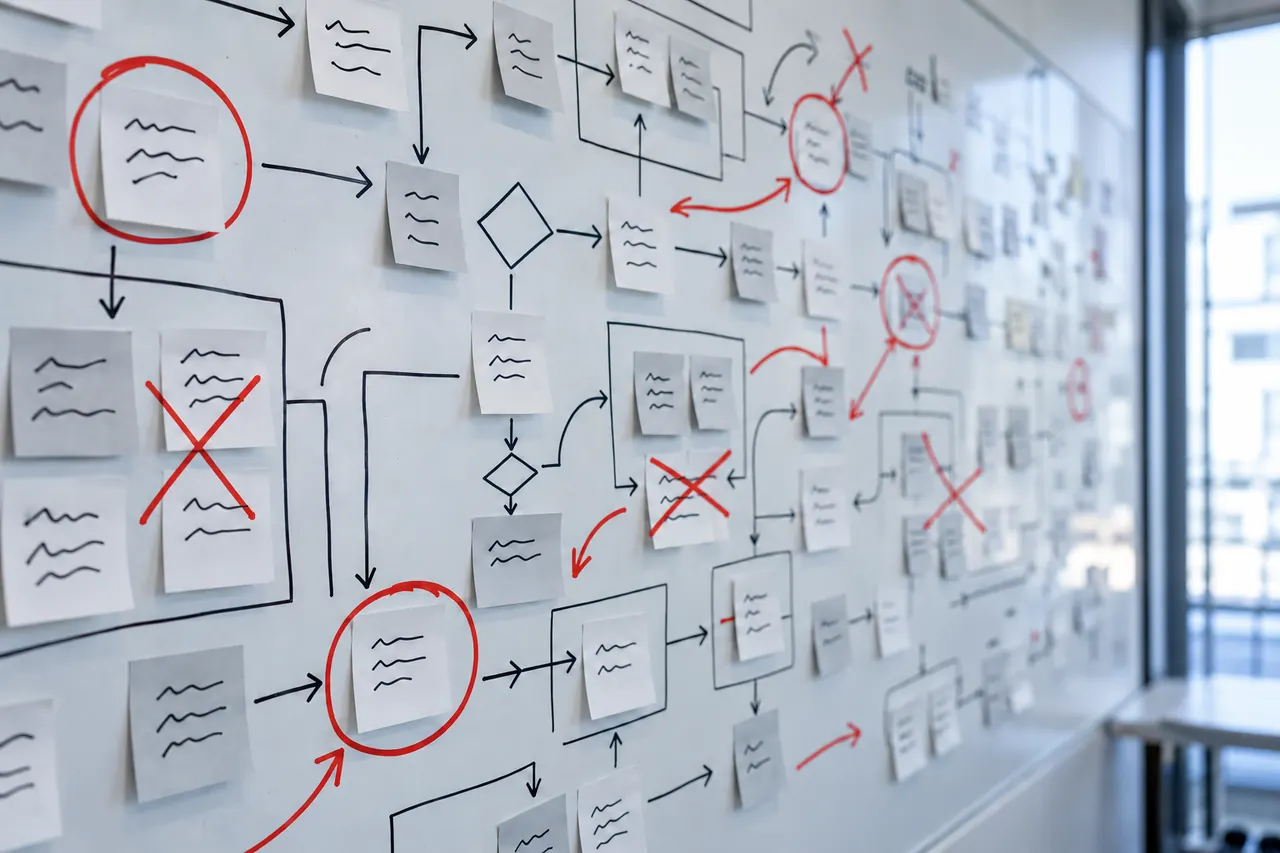
Map the actual process. Separate real requirements from historical workarounds. Identify unnecessary steps, duplicate work, failure points and opportunities.
- A map of the process as it really runs today
- Which steps are genuine requirements and which are workarounds
- Where work is duplicated and where it tends to fail
- What happens with exceptions, not just the ideal path
Engineer
Design the simplest appropriate solution. Explain the proposed scope, trade-offs, likely operating costs and success measures. Technology follows the problem.
- Options compared, including improving what you already have
- Scope, trade-offs and likely running costs, in plain English
- Agreed measures of success
- How errors and exceptions will be detected and handled
Deliver
Build, test, introduce the solution and verify agreed outcomes, with a proportionate handover: documentation, ownership, training, monitoring and a clear support arrangement where agreed.
- Built and tested against real scenarios, including failure cases
- Introduced at a pace the team can absorb
- Documentation, training and ownership made clear
- Monitoring and support arrangements as agreed for the project
We design for the awkward cases, not just the happy path.
Real processes have exceptions: a missing field, a late approval, a file in the wrong format, a system that’s briefly unavailable. A good solution expects them.
- We find the exceptions during discovery, alongside the normal flow.
- We decide which cases a rule can handle and which need a person’s judgement.
- Failures go to someone who can act, rather than failing silently.
- Where it’s sensible, work can be retried or resumed without starting again.
A proportionate handover.
What’s included depends on the project and is set out in its terms. These are the things we agree with you before the work begins.
- Documentation
- How it works, how to run it and what to do when it doesn't.
- Ownership
- Who owns the solution, the accounts and the code.
- Training
- Enough for your team to use and look after it with confidence.
- Monitoring
- How problems will be noticed, and by whom.
- Support
- A clear arrangement, where one is agreed.